Every year in Kota—from the bustling hostel lanes of Rajiv Gandhi Nagar, Landmark City, and Mahaveer Nagar to thousands of study desks across India—one question echoes as the winter chill sets in: "Kya abhi se padh kar January Session mein 99 percentile aa sakti hai?" The honest answer from Kota’s top faculties is an emphatic YES. But you cannot afford random study habits anymore. The last 90 days before JEE Main 2027 demand surgical precision, strict registration vigilance, disciplined chapter triage, and aggressive PYQ drills.
⚡ Kota Mentor 90-Day Reality Check:
You do not need 300 out of 300 marks to secure your dream NIT Trichy, Surathkal, or Warangal CSE seat. Across recent NTA score trends, 185 to 205 marks comfortably unlocks a 99+ percentile. That means accurately solving just 48 to 52 questions out of 75. Depth in selected chapters beats shallow completion of 100% syllabus every single time!
JEE Main 2027: Important Dates & Exam Overview
National Testing Agency (NTA) conducts the Joint Entrance Examination (Main) in two sessions. The January session has historically offered the highest percentile-to-marks ratio because many Class 12 students are pre-occupied with board practicals and pre-boards, giving disciplined droppers and proactive 12thies a massive competitive edge.
| Event / Milestone |
Session 1 (January 2027) |
Session 2 (April 2027) |
| Online Registration Window |
Late October – Early December 2026 |
Early February – Early March 2027 |
| Application Correction Window |
Second week of December 2026 |
Mid-March 2027 |
| Advance City Intimation Slip |
Second week of January 2027 |
Last week of March 2027 |
| Admit Card Release |
3 to 4 days prior to exam date |
3 to 4 days prior to exam date |
| Tentative Exam Dates |
Late January to Early February 2027 |
First to Second week of April 2027 |
JEE Main 2027 Registration: Step-by-Step & Document Checklist
Every year, hundreds of Kota hostelers lose precious study days running between cyber cafes in Talwandi or Vigyan Nagar because of form rejection warnings. Make sure you avoid clerical blunders during JEE Main 2027 registration.
Mandatory Pre-Registration Checklist:
- Aadhaar Card Authentication & DigiLocker / APAAR ID: Ensure your full name, father's name, and date of birth on your Aadhaar card match your Class 10 Board Marksheet character-for-character. If there is a mismatch, update your Aadhaar immediately at an enrolment centre.
- Category Certificates (GEN-EWS / OBC-NCL / SC / ST / PwD): OBC-NCL and Gen-EWS certificates must strictly be issued on or after the official financial year cutoff specified by NTA (usually on or after April 1). If you don't have the updated certificate ready during application, you can submit the official NTA undertaking form.
- Photograph & Signature Specifications: Passport-size photograph (10 KB to 200 KB) with 80% face coverage against a clean white background. Do not wear caps or tinted spectacles. Clear signature on white paper with black ballpoint pen (4 KB to 30 KB).
- Permanent Active Mobile Number & Email: Do not use a cyber cafe operator's email address or a temporary hostel SIM card. All OTPs, city slips, and scorecards are sent to these credentials.
⚠️ Common Registration Trap:
Avoid filling your application during the final 48 hours of the deadline. NTA servers frequently encounter gateway timeouts and transaction failures during the last days. Complete your form within the first 10 days of registration opening.
The Last 90 Days Master Preparation Schedule (Month-Wise)
When you have 90 days left for JEE Main 2027 preparation, random chapter jumping is counterproductive. You must divide your remaining time into three distinct, goal-driven phases:
Phase 1: Days 1 to 30 — Syllabus Consolidation & High-Yield Mastery
Primary Goal: Finish all Tier-1 and Tier-2 chapters that carry guaranteed weightage. If you are a Class 12 student, synchronize this with your pre-board syllabus. If you are a dropper, ruthlessly wrap up your weak Class 11 backlogs.
- Spend 60% of your time on problem solving and 40% on theory notes.
- Complete 30 to 40 selected questions per chapter from coaching modules (Exercise-1 / JEE Main Level).
- Take 1 Part-Syllabus test every Sunday to monitor concept retention.
Phase 2: Days 31 to 60 — The PYQ Marathon & Speed Calibration
Primary Goal: Stop reading new heavy theory. Transition 80% of your daily hours into solved paper sprints and previous year questions.
- Solve all 2022, 2023, 2024, 2025, and 2026 shift papers in chapter-wise format.
- Establish your Error Notebook (Mistake Copy). Log every calculation error, silly misinterpretation, and forgotten formula.
- Take two 3-hour full-length mock tests per week strictly between 9:00 AM – 12:00 PM or 3:00 PM – 6:00 PM to synchronize your circadian brain rhythm with NTA exam slots.
Phase 3: Days 61 to 90 — Full-Length CBT Simulators & Precision Tapering
Primary Goal: Real exam condition testing, minimizing negative marking, and multiple rounds of short notes revision.
- Attempt full Computer-Based Tests (CBTs) every alternate day using official timer software.
- Spend 2.5 hours analyzing every 3-hour test: categorizing mistakes into Knowledge Gap vs Execution Slips.
- Daily 1-hour active recall for NCERT Inorganic Chemistry (tables, colours, anomalies) and Organic Named Reactions.
High-Priority Chapters Matrix (Physics, Chemistry, Maths)
Not all chapters in the JEE Main syllabus are created equal. In Physics and Chemistry, certain compact chapters offer 4 to 8 marks with minimal effort, whereas topics like Rotation can swallow weeks with unpredictable returns. Here is the Kota faculty-curated chapter prioritization:
| Subject |
Tier 1: High Yield & Fast Scoring (Must Master) |
Tier 2: Solid Returns (Moderate Effort) |
Tier 3: Lengthy / Low ROI (Do Basic Formulas) |
| Physics |
Modern Physics (Dual Nature, Atoms, Nuclei)
Semiconductor & Logic Gates
Current Electricity & Circuits
Thermodynamics & KTG
Gravitation & SHM
|
Electrostatics & Capacitors
Ray Optics & Optical Instruments
EMI & Alternating Current
Kinematics & Work-Energy-Power
Units & Dimensions
|
Rotational Motion (Focus on MOI & Torque basics only)
Fluids & Surface Tension
Wave Optics (YDSE formula only)
|
| Chemistry |
Coordination Compounds
Chemical Bonding & Molecular Structure
Solutions & Electrochemistry
GOC & Hydrocarbons
Biomolecules & Amines
|
Thermodynamics & Thermochemistry
Chemical & Ionic Equilibrium
d & f Block Elements
Aldehydes, Ketones & Carboxylic Acids
Periodic Table Trends
|
Complex Real Gas equations
Extensive qualitative salt analysis beyond NCERT
|
| Mathematics |
Vector Algebra & 3D Geometry (Guaranteed 3-4 Qs)
Matrices & Determinants
Sequences & Series (AP, GP, Telescoping)
Binomial Theorem (General term & Remainder)
Statistics
|
Definite Integration & Area Under Curve
Differential Equations
Straight Lines & Circles
Quadratic Equations
Probability
|
Complex Numbers (Lengthy coordinate applications)
Indefinite Integration (Heavy substitution traps)
Permutations & Combinations (High difficulty variation)
|
The 3-Round PYQ Mastery Framework (2019–2026)
Most students open a PYQ book, attempt a question, get stuck within 60 seconds, and peek at the printed solution. This creates an illusion of competence. The moment the question is slightly twisted in the real NTA exam, they freeze. Top Kota rankers use the 3-Round Method:
- Round 1 (Timer-Based Attempt): Pick 30 PYQs from a chapter. Set an alarm for 45 minutes for Physics/Chemistry, or 60 minutes for Maths. Solve without touching notes or formula sheets. Mark questions you solved cleanly, questions you were unsure about, and questions you could not crack.
- Round 2 (Hintless Re-attempt): For the questions you couldn't solve in Round 1, do NOT read the solution yet. Open your class notes or NCERT to revisit the underlying concept. Try to crack the question yourself with the concept refreshed.
- Round 3 (Error Tagging & Solution Audit): Now examine the author's solution. If their method was shorter or used a symmetry trick, note it down. Tag the question in your book: [C] = Calculation Trap, [F] = Formula slip, [T] = Tricky Concept. These tagged questions are your goldmine for quick revisions.
JEE 2027 Best Books Recommended by Kota Mentors
One of the quickest ways to ruin your JEE Main 2027 preparation is accumulating stacks of foreign author books like Irodov, Krotov, or Morrison Boyd for an exam that primarily tests conceptual clarity and numerical agility. Here is the curated booklist for JEE 2027:
Physics:
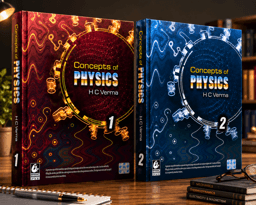
- Concepts of Physics by H.C. Verma (Vol 1 & 2): Unmatched for building foundational intuition. Read theory, solve Objectives I & II, and selected exercises.
- Coaching Study Modules (Allen / Resonance / Motion): Perfect for graded problem sets (Exercise-1 for Main, Exercise-2 for Advanced).
- Disha 47 Years Chapter-wise Solved Papers: Essential for getting familiar with NTA's exact question formats and patterns.
Chemistry:
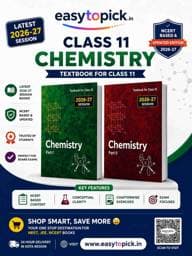
- Official NCERT Textbooks (Class 11 & 12): The Bible for Inorganic & Organic. 85%+ of questions in JEE Main Chemistry are direct NCERT derivatives.
- Problems in Physical Chemistry by Narendra Avasthi (Balaji): Level 1 is the gold standard for JEE Main numerical calculation speed.
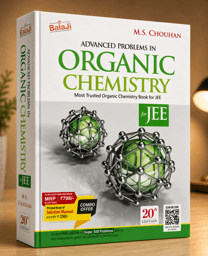
- Advanced Problems in Organic Chemistry by M.S. Chouhan: Outstanding for mastering GOC, isomerism, and reaction conversions.
Mathematics:
- Cengage Mathematics Series by G. Tewani: Exceptional solved illustrations and concept clarity for Coordinate Geometry and Calculus.
- Coaching DPPs & Question Banks: Mathematics in JEE Main has become lengthy since 2021; daily timed DPP practice is mandatory.
- JEE Main Chapterwise Solved Papers (2019-2026): Non-negotiable. Math questions repeat identical step patterns across shifts.
Fatal Mistakes Kota Aspirants & Droppers Must Avoid
Having mentored thousands of students over 12+ years in Kota, here are the top 5 self-sabotaging mistakes that drop percentiles from 99 to 88:
- 1. The "Tomorrow When Syllabus Finishes" Mock Test Phobia: Students postpone mock tests claiming their syllabus is only 60% complete. Newsflash: your syllabus will never feel 100% complete. Give mock tests with whatever you have prepared. Mocks train your time-management and test temperament.
- 2. Multiple Reference Book Trap: Solving 20 questions each from 5 different books is infinitely inferior to solving 100 questions from one good coaching module or PYQ book twice.
- 3. Ignoring Chemistry: Maths feeds your ego, Physics feeds your curiosity, but Chemistry builds your rank! Chemistry can be comfortably completed in 35 to 40 minutes in the exam hall, leaving you 140 minutes to fight for every tough math question.
- 4. Neglecting Physical Health & Sleep in Kota Hostels: Pulling all-nighters right before major weekly minors disrupts cortisol levels and degrades reaction speed. Get 6.5 to 7 hours of consistent sleep. Keep hydrated and avoid oily street snacks in Gumanpura or Landmark food stalls.
- 5. No Dedicated Error Notebook: If you don't write down why you got question #42 wrong today, you are guaranteed to make that exact same mistake in January 2027.
Daily Routine for Droppers (11-12 Effective Hours)
- 06:30 AM – 07:00 AM: Wake up, light stretching, quick hydration & tea.
- 07:00 AM – 09:30 AM (Block 1): Inorganic Chemistry active recall & NCERT line-by-line reading (fresh brain state).
- 09:30 AM – 10:15 AM: Healthy breakfast & bath.
- 10:15 AM – 01:15 PM (Block 2): Coaching classes or intensive Physics numerical problem-solving marathon.
- 01:15 PM – 02:15 PM: Lunch & 20-minute power nap (avoid screens).
- 02:15 PM – 05:15 PM (Block 3): Mathematics problem solving (timed 30-question DPPs).
- 05:15 PM – 06:00 PM: Evening stroll, fresh air, hostel chat.
- 06:00 PM – 09:00 PM (Block 4): Organic & Physical Chemistry reaction mechanisms & numerical practice.
- 09:00 PM – 09:45 PM: Light dinner.
- 09:45 PM – 11:30 PM (Block 5): Error Copy review, formula cards, and planning next day's task list.
- 11:30 PM: Sleep (7 hours of non-negotiable rest).
Daily Routine for Class 12 Students (Board + JEE Balance)
- 06:00 AM – 07:15 AM (Block 1): Formula revision & Organic named reactions before school/classes.
- 07:30 AM – 01:30 PM: School / Coaching attendance (Use free library periods to solve coaching DPPs).
- 02:00 PM – 03:00 PM: Lunch, refresh, short rest.
- 03:00 PM – 06:00 PM (Block 2): Core JEE Main problem solving (Physics & Maths PYQs).
- 06:00 PM – 06:30 PM: Evening snack & physical break.
- 06:30 PM – 09:30 PM (Block 3): Class 12 Boards synergy study (NCERT derivations, subjective problems, Board English/PE).
- 09:30 PM – 10:15 PM: Dinner.
- 10:15 PM – 11:45 PM (Block 4): 1 timed chapter test or Error notebook update.
- 11:45 PM: Lights out.
Frequently Asked Questions (FAQs)
Q1: When will JEE Main 2027 Session 1 registration start?
Answer: NTA typically opens the JEE Main 2027 Session 1 online registration portal in late October to early November on jeemain.nta.nic.in. The application window remains active for approximately 4 to 5 weeks.
Q2: Can a dropper or average student crack 99 percentile in the last 90 days?
Answer: Yes, absolutely. JEE Main rewards depth and accuracy in high-yield topics over 100% superficial syllabus coverage. Scoring 185 to 205 marks is sufficient for a 99+ percentile in most shifts, which requires getting approximately 48 to 52 questions right with minimal negative marking.
Q3: What are the JEE 2027 best books for Chemistry?
Answer: NCERT Chemistry Class 11 & 12 is strictly mandatory for Inorganic and Organic theory. For numerical physical chemistry practice, Narendra Avasthi (Problems in Physical Chemistry) is recommended. For organic reaction mechanisms, MS Chouhan paired with coaching notes is ideal.
Q4: How many years of PYQs are required for JEE Main 2027?
Answer: At minimum, solve all shift papers from 2021 to 2026. Because NTA conducts multiple shifts every session, 2021–2026 alone provides over 120 authentic exam papers (over 3,500 questions per subject), making external mock test series secondary to genuine NTA papers.
Q5: How should Class 12 students balance CBSE/State Board prep with JEE Main 2027?
Answer: Follow a 70:30 formula. Dedicate 70% of your daily study hours to JEE problem solving and PYQs, and 30% to board subjective derivations, English, and physical education. Since NCERT is identical for both, mastering NCERT line-by-line simultaneously prepares you for boards and JEE Main.